
Blog

  • Are Peptides Safe? What the Data Actually Shows

    Are Peptides Safe? What the Data Actually Shows

    Are Peptides Safe? A Clear Answer

    If you’re researching peptides, one of the most important questions is:
    👉 Are peptides safe?

    The answer depends on two critical factors:
    the biological nature of the peptide and the quality of the compound itself.


    🧬 Quick Answer

    Peptides can be safe when they are biologically compatible, properly dosed, and verified through independent lab testing. However, unregulated or low-quality peptides can carry serious risks.


    🧬 The Biological Baseline: How Safe Are Peptides Naturally?

    From a clinical standpoint, therapeutic peptides are designed to be highly specific.

    Unlike traditional synthetic drugs—which often cause widespread, unintended interactions—peptides act like high-precision biological keys, binding only to specific receptors.

    Because they are made of amino acids, the body can naturally break them down after use, leaving minimal toxic byproducts.

    👉 This makes many peptides biologically compatible and generally well-tolerated.

    However, compatibility does not mean risk-free.
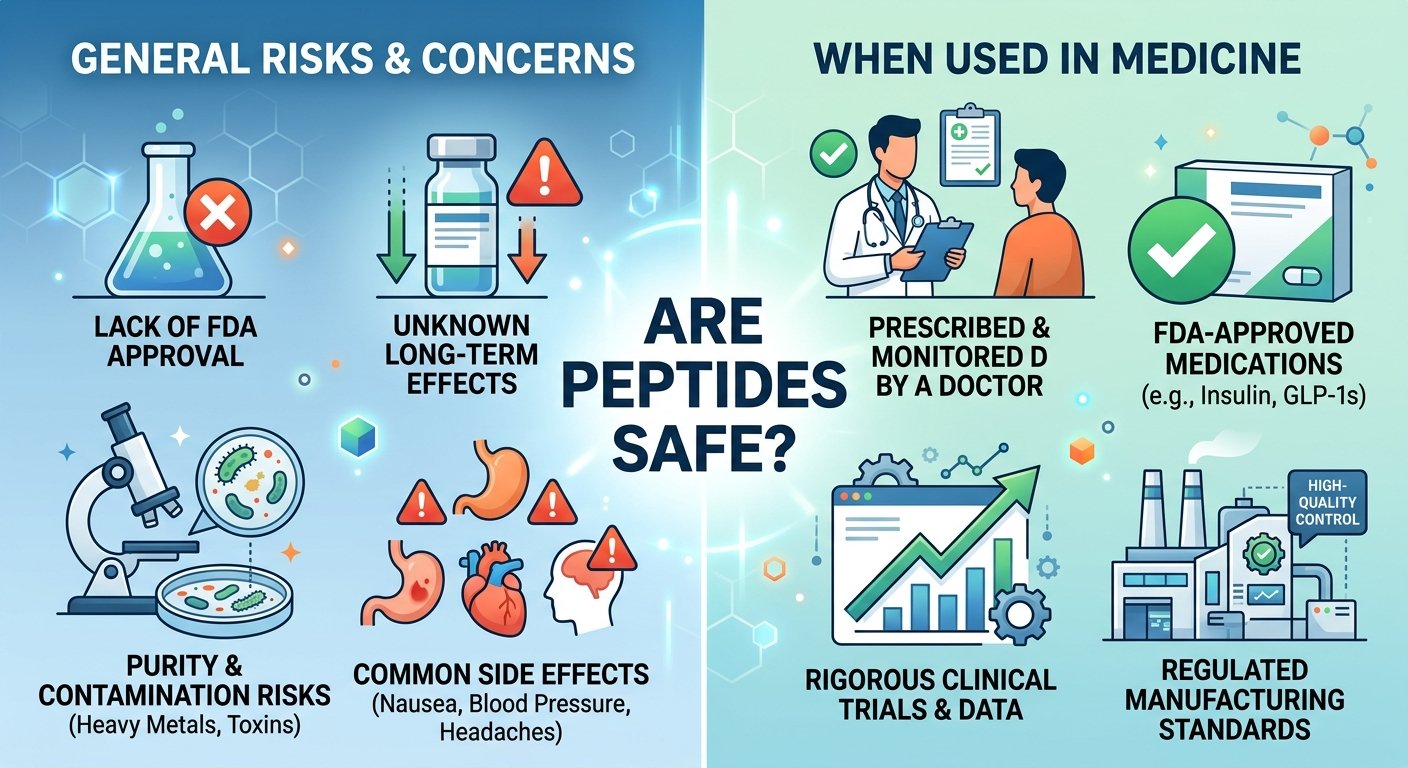
    are peptides safe

    🧪 Why Peptides Are Considered “Targeted” Compounds

    One of the main reasons peptides are often described as safer compared to traditional pharmaceuticals is their target specificity.

    Most conventional drugs interact with multiple pathways in the body, which can lead to unwanted side effects. Peptides, on the other hand, are designed to bind to very specific receptors, triggering highly controlled biological responses.

    This targeted mechanism is what makes peptides particularly interesting in modern research.

    👉 Instead of affecting the entire system, peptides can influence one precise function at a time, such as:

    • Stimulating collagen production
    • Regulating appetite signals
    • Supporting tissue repair

    However, this precision also means that incorrect usage or poor-quality compounds can disrupt very specific systems, making proper verification even more critical.


    🚨 The Real Risks: Side Effects and Misuse

    Even high-purity peptides can produce effects depending on:

    • Dosage
    • Frequency of use
    • Individual biology

    Common side effects include:

    • Localized irritation (redness, swelling, itching)
    • Water retention and fatigue
    • Temporary metabolic fluctuations (blood sugar changes)

    👉 For example, peptides like Ipamorelin or CJC-1295 may cause mild fluid retention if not properly managed.


    ⚠️ The Primary Rule: Dosage Control

    Biological systems operate on tight feedback loops.

    Overusing peptides or running uncontrolled cycles can:

    • Desensitize receptors
    • Disrupt natural hormone production
    • Reduce long-term effectiveness

    👉 More is NOT better.


    🔬 The Biggest Risk: The Unregulated Market

    Here’s the most important truth:

    👉 The biggest risk is not the peptide—it’s the marketplace.

    Due to rising demand, many suppliers sell:

    • Low-quality compounds
    • Mislabeled products
    • Poorly tested materials

    Independent testing of random peptide samples often reveals:

    🚨 Common contamination issues:

    • Heavy metals (lead, arsenic, mercury)
    • Residual solvents (acetonitrile, TFA)
    • Incorrect potency or completely different compounds

    👉 This is where most real-world danger comes from.


    🌍 Why the Peptide Market Is So Unregulated

    Unlike pharmaceutical drugs, many peptides exist in a gray area between research chemicals and therapeutic compounds.

    This creates a situation where:

    • Regulations vary between countries
    • Some vendors operate without strict quality control
    • Products are sold without standardized testing

    Because of this, the responsibility shifts from regulators to the end user or researcher.

    👉 This is why understanding COA reports and lab verification is not optional—it is essential.

    As demand continues to grow globally, this gap between scientific potential and market quality is one of the biggest challenges in the peptide industry today.


    🛡️ How to Verify Safety: The 3 COA Benchmarks

    To reduce risk, you must rely on verifiable lab data—not marketing claims.

    A proper Certificate of Analysis (COA) should confirm:


    1. Purity (99% or higher)

    Ensures the compound is free from harmful impurities.


    2. HPLC Testing

    Confirms the separation and measurement of the peptide versus contaminants.


    3. Mass Spectrometry (MS)

    Verifies the exact molecular identity of the compound.


    👉 Without these, you cannot confirm what you’re dealing with.


    🔗 Start With the Basics

    If you’re new to peptides, start here:

    👉 Read our complete guide on what are peptides


    ⚖️ Short-Term vs Long-Term Safety Considerations

    When evaluating peptide safety, it’s important to separate:

    Short-term safety

    Many peptides show relatively mild or manageable side effects when used correctly over short periods.


    ⚠️ Long-term uncertainty

    The long-term effects of many newer or experimental peptides are still being studied.

    This means:

    • Data may be limited
    • Long-term hormonal effects are not fully understood
    • Chronic misuse could lead to imbalances

    👉 This is why long-term safety should never be assumed without strong clinical evidence.


    🧠 Final Verdict

    So, are peptides safe?

    👉 Biologically, many peptides are precise and well-tolerated.
    👉 In reality, safety depends entirely on quality, verification, and proper use.

    A peptide is only as safe as the lab data behind it.


    🚀 Final Takeaway

    If a supplier cannot provide a verified, batch-specific COA, the compound should be considered unsafe.

    At Peptora, we focus on clarity, verification, and real data—so you can understand peptides without confusion or risk.
  • What Are Peptides? Benefits, Uses, and Complete Beginner Guide

    What Are Peptides? Benefits, Uses, and Complete Beginner Guide

    What Are Peptides in Simple Terms

    If you’ve been wondering what peptides are, you’re not alone. Peptides are one of the most talked-about topics in health, fitness, and skincare—but they’re often explained in a confusing way.

    Let’s break it down simply.


    🧬 What Are Peptides (Quick Answer)

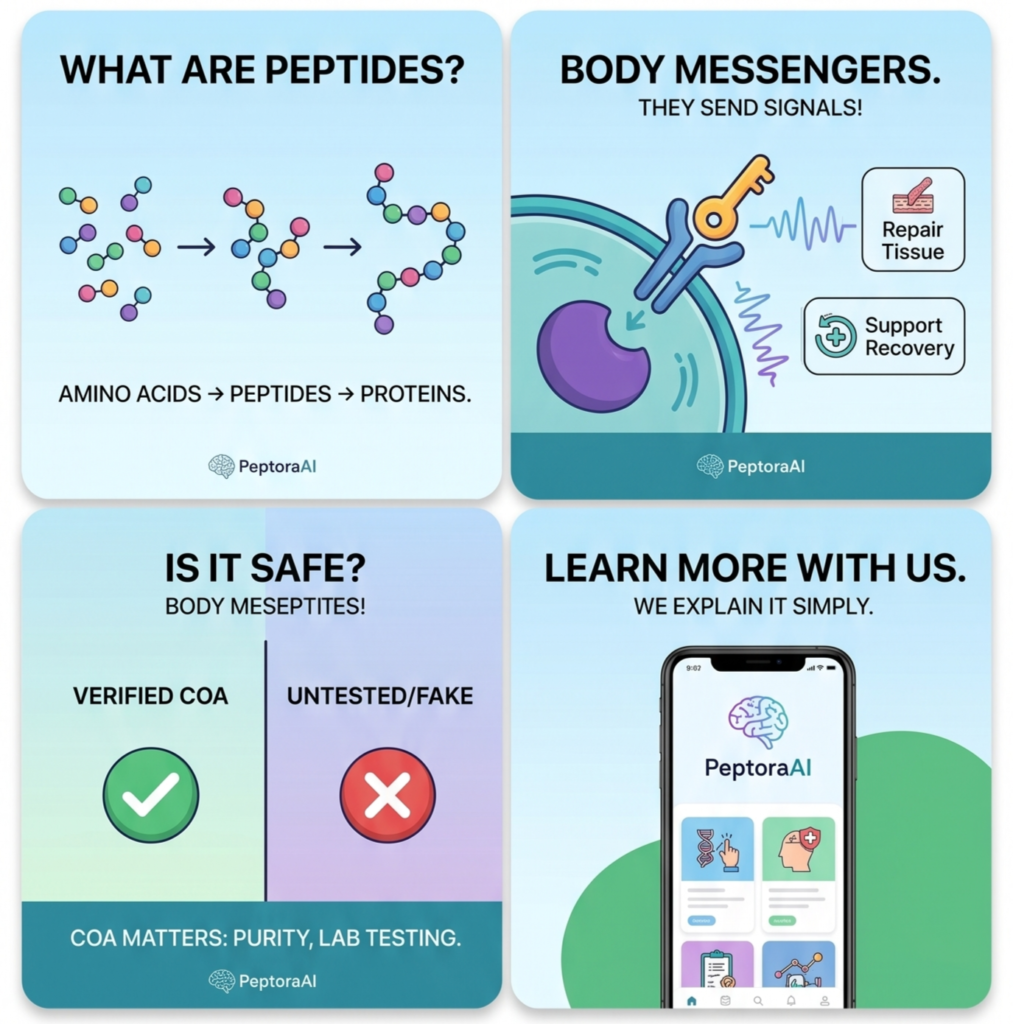
    Peptides are short chains of amino acids (2–50) that act as signaling molecules in the body, helping regulate functions like healing, metabolism, and hormone activity.


    🧬 What Are Peptides? (Detailed Explanation)

    Peptides are short chains of amino acids, which are the building blocks of proteins. In simple terms, you can think of peptides as small proteins that help your body function properly.

    Scientifically, peptides usually contain 2 to 50 amino acids linked together by peptide bonds.

    Your body naturally produces thousands of peptides, and they play a crucial role in processes like healing, hormone regulation, and metabolism.

    👉 If you want a deeper foundational understanding, read our full guide on
    what are peptides.

    what are peptides

    ⚙️ How Peptides Work in the Body

    Peptides act as messengers in your body. They send signals to cells and tell them what to do.

    For example:

    • Some peptides signal your body to produce more collagen
    • Others help regulate blood sugar levels (like insulin)
    • Some support muscle growth and recovery

    Because peptides are smaller than proteins, they are easier for the body to absorb and use quickly.


    🧩 Types of Peptides

    There are many different types of peptides, each with a specific function:

    1. Signaling Peptides

    These tell cells how to behave, such as repairing tissue or producing hormones.

    2. Structural Peptides

    Help build important structures like skin, hair, and connective tissue.

    3. Hormonal Peptides

    Examples include insulin, which controls blood sugar levels.

    4. Antimicrobial Peptides

    These help fight bacteria, viruses, and infections.


    🌟 Benefits of Peptides

    Peptides have become popular because of their wide range of potential benefits:

    Skin Health & Anti-Aging

    Peptides can help boost collagen production, improving skin elasticity and reducing wrinkles.

    Muscle Growth & Recovery

    Some peptides may support muscle repair and recovery after workouts.

    Fat Loss & Metabolism

    Certain peptides are linked to improved metabolism and fat-burning processes.

    Healing & Tissue Repair

    Peptides play a key role in wound healing and recovery.

    Hormonal Balance

    They help regulate hormones that control many body functions.


    ⚖️ Peptides vs Proteins: What’s the Difference?

    Although peptides and proteins are closely related, they are not the same.

    FeaturePeptidesProteins
    Size2–50 amino acids50+ amino acids
    FunctionSignaling, regulationStructure, enzymes
    AbsorptionEasierMore complex

    👉 Simple breakdown:
    Peptides = small, fast-acting messengers
    Proteins = larger structural molecules


    🧪 Common Uses of Peptides

    Peptides are widely used in different industries:

    🧬 Medicine

    • Diabetes treatment (insulin)
    • Weight loss medications
    • Hormone therapies

    💪 Fitness & Performance

    • Muscle growth support
    • Recovery enhancement

    🧴 Skincare

    • Anti-aging creams
    • Collagen-boosting serums

    🔬 Research

    • Studying diseases and biological processes

    ⚠️ Are Peptides Safe?

    Peptides can be safe when used correctly, especially those approved for medical use.

    However, not all peptides are the same:

    • Approved peptides (like insulin) are well-studied
    • ⚠️ Unregulated peptides sold online may not be safe

    👉 Always consult a professional before using any peptide-based product.


    🔥 Why Are Peptides So Popular Right Now?

    Peptides are trending because they offer targeted and efficient results.

    Unlike many supplements, peptides can:

    • Directly interact with cells
    • Trigger specific biological responses
    • Work faster due to their small size

    This makes them valuable in health, fitness, and skincare industries.


    🧠 Conclusion

    Peptides are short chains of amino acids that act as powerful signaling molecules in the body. They help regulate essential functions like healing, metabolism, and hormone balance.

    As research continues, peptides are expected to play an even bigger role in modern medicine and wellness.


    🚀 Final Takeaway

    If you want to truly understand peptides and avoid misinformation, focus on clear, verified knowledge.

    At Peptora, we break down complex peptide science into simple, practical insights—so you can make informed decisions with confidence.

    👉 Start with our foundational guide on what are peptides and continue exploring are peptides safe.